Wednesday, 27 February 2019

The Definitive Interview With Dream Pop Newcomer Dream Reporter

Dream Reporter Interview | New Music Friday| Dream Pop

I know it's not nice to have favourites but if I had to chose, I'd say this is the favourite interview I've ever done. Brand new to the Dream Pop scene, Dream Reporter talks about her name, musical influences, song-writing process and the importance of self-belief. She also teases the name of what could possibly be her next single! I think you'll enjoy this one as much as I did!

The name Dream Reporter invokes all sorts of wonderful connotations. What is the story behind it?

It’s funny you ask, I do believe that there’s a lovely kind of kismet about how names come about - what is or seems random ultimately takes on a story all of its own. Especially once it belongs to the wild too which is a most beautiful thing.

I had the moniker Reporter kicking around for a while during the early writing stages, I really liked the way it sounded to say it, I think anything with three syllables has a good chanting potential ha. It’s not a very easy name to differentiate online though, which obviously meant it wasn’t an ideal name for socials and stuff. And as you will appreciate, usually the first thing anyone asks when you tell them you make music is, what does it sound like? And of course I always said Dream pop.

I’m really obsessed by music that has a dream like quality to it, that gives you that feeling of tugging at something deep inside of you. When I listen to certain tracks it’s like I’m suddenly awake and everything else that seemed real is actually the dream. It’s such a crazy intense feeling and that connection that music gives me, to what is primal inside me, to that which is perhaps hidden even from my conscious self, is what drives me to make music and create art.

I’ve always loved all that is mystic and the way in which our subconscious and our desires can have such power over us, how our intuition can be really finely tuned if we trust and let it guide us. It’s so interesting too, exploring that place between what we want and what we dream of so once I thought of it, it seemed like the most obvious thing in the world to add Dream to Reporter. I wholly believe in visualising what you want, who you want to be, visualising it so clearly it’s like watching a film of your own life. It sounds kind of crazy, but I believe when we are clear what we need from ourselves and our path then the universe, it finds a way to provide. Not always in a way we expect either, which is what makes the task of being open and receptive to the signs such a lifelong journey. The most exquisite puzzle.

How long have you been making music? Have you performed in other bands or under any other names?

I have been making music since I could talk haha, I loved to sing songs about anything and everything as a child, just kind of making them up as I went along. We kind of lose that a little as we get older I think, but if i’m honest I still do it haha! I tried learning the piano but my father couldn’t stand the sound of my practising and I lost interest quickly anyway. I taught myself guitar to accompany my first songs, but I always felt self conscious about my abilities so didn’t really push myself. I found it easier to write melodies or hooks in my head or on keys and then just get my talented friends to play them! A bit lazy of me I guess. I didn’t use a name until I started calling myself Reporter, so no, no other names.

Did you study music formally or are you self-taught?

Self taught bb!

Who are your major musical influences? If you could open for one artist or band who would it be?

Oh my gosh just thinking about the second part of this question gives me goosebumps haha! It would be so incredibly hard to pin it down to one i think. But probably The Smashing Pumpkins. Or Fleetwood Mac. Or Interpol. Or Bjork. Or even Frank Ocean. Gosh, it’s too hard haha.

I feel like discovering different artists kind of punctuated my life, and still does. It’s how I think about different periods, what music I was into at that time. Growing up I was lucky that my parents loved music and had pretty eclectic taste. I loved Queen and Bowie and Joni Mitchell, Van Morrison, Michael Jackson, Leonard Cohen, Earl Klugh, Joan Armatrading, Lauren HIll, Kate and Anna McGarrigle, Carly Simon, loved her. Whatever was playing at home I danced and sang my heart out to! I was a huge Mariah Carey fan, truly I would sing to all her records! And films and their soundtracks was a way I discovered a lot of great music too, I listened to the Romeo and Juiett soundtrack almost to death haha! I took a coach to school everyday and the Capital radio was always playing the latest hits, there was a group of us and we’d sit together singing along to all over favorite pop songs on the journey home. Then I discovered Jeff Buckley, Elliott Smith and Cocteau Twins and all that incredible 80’s music that dominated the radio. Then the Smashing Pumpkins became my first real musical obsession, and everything grunge I guess. I loved Nirvana, Catatonia, Hole, REM, Green Day, Ash, Coldplay.

Interpol was the next big love of my life, what a band. The Maccabees, Lana Del Rey, Bombay Bicycle Club, Florence and the Machine. Bon Iver. Daughter, Ulrika Spacek, Odesza, I mean there will be hundreds of bands I’m missing here too, just impossible to write down everything!

I’m really the biggest music fan and geek haha, and as an artist I have been inspired by other artists for sure. Probably more individual songs and sounds that have influenced me, and wanting to share my world in a way that reaches other people in the way music reached me.

Are you back in London? Are you planning any gigs in the near future?

I’m on the West Coast at the moment but London is always calling me. It’s where I grew up and discovered music and saw my first shows and so it’s where I feel most deeply connected to my creative energy I think. It’s been amazing getting to explore and discover a different creative family in other places too and I think my writing will definitely benefit from that.

You’ve been touring the States. Which was your favourite venue or gig?

It’s not been a full tour yet but I’ve played in San Francisco and Los Angeles. I loved playing at Brick and Mortar because the sound is incredible for a smaller venue, plus it’s got a really great vibe and attracts a good crowd. I just played Hotel Cafe and that was a very cool experience though very different. You hear a lot of different opinions about playing LA, but I loved that that venue is where music fans come because they really want to hear new music. They pay attention! It was wild.. It was my first LA show and it was a stripped down set that I’d only really had time to rehearse for a hour that day with a new guitarist, so I guess for that reason it feels very special as it was a new experience both playing the songs that way and in a totally new city.

Now that your single is out, what can we expect next? Any plans for a full-length album?

I know everyone talks about the death of the album, but to me the most incredible thing is when you discover a new band or artist and they make a record that is just like the most delicious thing from start to finish. I love when there isn’t one track you want to skip, and that’s a rare thing so I guess what I’m saying is that I set the bar pretty high for myself haha!

In truth it might be a couple of singles yet before the album drops, I’m aiming to make it worth the wait though :)

What is your biggest challenge as a musician? Have you been able to overcome that and if so, how?

As a musician there are quite a lot of hidden challenges, or rather things it’s easy to overlook if you’ve not experienced the process. I can think of three big ones right now.

The first, and it sounds so simple, but it’s just self belief. A true, honest and humble place of self-belief. It takes so much, like just a crazy amount of time and effort to get good at something as abstract in a way as writing songs and finishing them, so you have to really steel yourself for the times of self doubt and the times you just don’t want to do it anymore or you question why anyone would devote themselves to something so likely to fail! You have to know that there are those days and that that is normal and a part of the process. And you have to dust yourself off and try again.

The second is treading the delicate balance of knowing when something still needs work and when it’s kind of done. And I say kind of because you can nit pick forever, but at a certain point doing more will not make it any better. At the same time, you can know your music so well or be so familiar with things being a certain way that you get a bit closed off to possibilities. Or tweaks that help progress things. So it’s quite a journey getting to your own individual place of being open enough to let something be what it needs to be while not getting lost down endless rabbit holes, knowing just when to call it time. You also soon discover that as much as deadlines are a pain, they can also be a saviour in that regard!

The third is finding a way to balance yourself in a job that for the most part doesn’t have a routine or structure in the sense that other people, unless they’re also creatives, will understand. I find it can be a very solitary existence, because you have to be so disciplined about sticking to your own path.

I think as fans we underestimate how much time, effort and money goes into the song-writing and recording process. The next couple of questions are about that.

Do you write your own songs? Can you describe your song-writing process?

Yeah I do write all my own songs, and arrangements. Songs come together in parts for me, no particular order but roughly the lyrics, the melody and hooks are first then the arrangements and the harmonies.

I have a good practise of making myself write my thoughts or feelings down as they come to me, so it’s not unusual that a song comes out almost fully formed. I think of lyrics as a form of poetry and when I think about expressing those emotions a kind of melody or rhythm will usually be in mind. So I start there and then build everything else out around it.

Which studio did you record in?

I recorded most of my tracks at Urchin Studio in London, and a few bits here and there at my home studio.

Did you record with a band or do you play all the instruments on your tracks?

I’m very fortunate that a lot of my friends are excellent musicians who were happy to play parts for me if I needed it.

Do you have any advice for artists just starting out?

You can waste a lot of time worrying about not being good enough in one way or another, particularly regarding body image. Looking at your idols and even your peers and how they seem to be perfect because they have it together in every area. The reality is, every path is different and you probably don’t have it together in every area at the beginning. But no one does, so don’t sweat it. It’s only as you move forward, when you take that first step by deciding to start, because as David Bowie said, “the truth is, of course, that there is no journey. We are arriving and departing all at the same time”. It’s the same for everyone, no matter how good or accomplished they are, it never feels like you’re “there”. So you have to know what your own personal goals are, and start with that.

And finally, if you could tell your fans to listen to just one track, what would it be?

It would be "Medicine", but that’s not out yet so I should say the latest single, "It Stays"!

SHARE:

Thursday, 17 August 2017

Interview: Tami Stronach, The Childlike Empress in NeverEnding Story

Have you ever wondered what happened to Tami Stronach, the Childlike Empress in Neverending Story? Well, wonder no more…

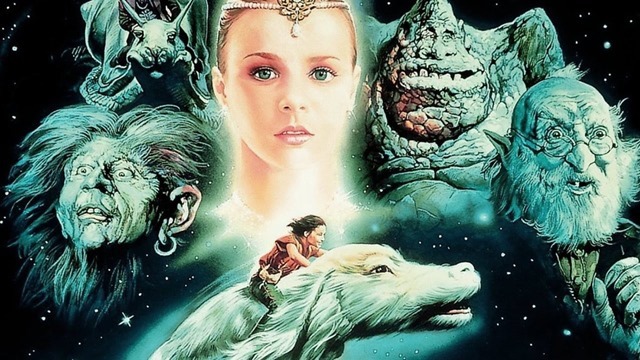
NeverEnding Story banner

In the summer of 1984, the most incredible event occurred that was to change the face of film forever: Neverending Story was released. Perhaps that is a little dramatic but to 11-year-old me it was a game-changer and I loved everything from the story to the soundtrack to Falkor the Luck Dragon and of course, Atreyu and The Childlike Empress. Naturally, we bought the video as soon as it was released on Betamax and later this was replaced by DVD. I’ve watched it more times than I can remember and throughout the years I’ve often wondered what happened to the young child actors that performed in the film (and where is Falkor these days!?)

I’m delighted to present this interview with Tami Stronach. Read on to find out where Tami is these days and the works she is doing in both theatre and dance.

Tami, you’re idolized by girls young and old. How does it felt to be playing role model to so many young girls?

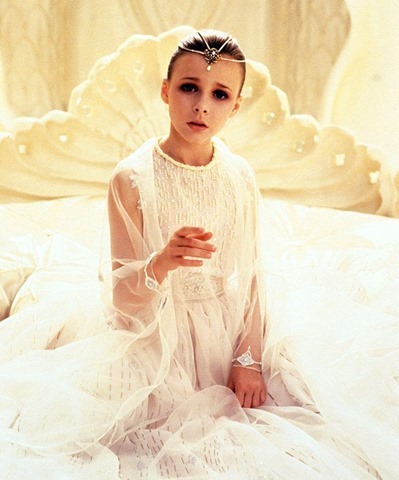
I feel very blessed to have been given the opportunity to play the role of the Childlike Empress. I love that this story redefines how we normally think of courage and strength. The character is a small girl who is very sick--she is bedridden. So her power doesn’t come from brawn, she doesn’t smash down doors-- it comes from being wise, from being still, from being compassionate and patient. I think it’s really important to remind young girls that they can have a really powerful impact on the world by acting on their empathy and using their intelligence. Now…. I love a fantastic female ninja warrior as much as anyone, and it is really satisfying to win with muscle too sometimes against the baddies, but I think there is real value in expanding the notion of what being strong is to include characteristics that our culture should value more highly. Confident amazing little girls who trust their hearts, play the long game and win through love...I hope that what the Empress models.

Tami Stronach as the Childlike Empress in NeverEnding Story

Was The Never-Ending Story the first role in which you were able to play such a strong, positive female role? Had you acted before the film?

I did not act in a film before. I was doing theater and dance...I played a cat, a wizard, a witch, an English street urchin, and Piglet from Winnie the Pooh. Hmm...seems like a lot of animal roles... and then the magical category of witches, wizards and an Empress...I’ve always really enjoyed playing parts where I can step outside of my ordinary life and transform.

Did you get the role through an audition process?

Yes...three auditions--SF then LA and a final one in Germany.

How was Wolfgang Peterson to work with? Was he good with the kids?

He didn’t really treat us like kids. He treated us as professional actors who had an important job to do. I loved that about him.

Tami Stronach in NeverEnding Story

Was there any reason you didn’t appear in the sequels?

I didn’t sign on for the sequels because my parents were really wary of me getting chewed up by the Hollywood machine, which can be really hard on kids. We’ve heard a lot of stories from 80s child actors about some of the bad things that could happen in the industry. That was real, and we saw glimpses of that, and felt it was better I steer clear. I don’t regret that. I love that they wanted me to grow up with a good foundation.

What keeps you busy – besides answering fan mail!- these days?

I run two companies Paper Canoe Company, an entertainment company, and Tami Stronach Dance in addition to teaching choreography to undergraduates and being a mom. Paper Canoe has developed two theater projects in New York, and an album called Beanstalk Jack in the last two years. We just finished a music video from one of the songs on “Beanstalk Jack,” which is something we’ll be doing more of. So for Paper Canoe Company some music concerts in NYC in the fall, and several projects in development based on our theatrical work, podcasts, videos, and, I hope soon, some film projects. And, I’ve got a couple of contemporary dance concerts on the calendar for the end of the year as well with Tami Stronach Dance.

Why is it important to you that you largely stick to family/children’s entertainment?

You know, we started Paper Canoe Company simply because many of our favorite stories—whether they are movies, books, or some other kind of medium—are ones that connect with people of all ages. As a parent, I want to be able to enjoy a story with my kid. This is a really magical time watching my daughter grow up and so right now this is what I am gravitating to. I think many of the most amazing stories like ET, or Star Wars, or Harry Potter, and of course The Neverending Story  - are just as powerful for the adults as they are for kids. That’s when you have a great story. A big story. A deep and sticky story.

I’m not knocking stuff that is just for grown ups—as an actor, I’d love to be in some edgy mystery series or an intense sci-fi thriller—as a choreographer the dance theater pieces I make are not geared for children and that content can be edgier--but Paper Canoe Company projects we want to be the kind of thing you watch together, or listen to together, a hundred times in your living room or on a family road trip. That’s why it’s called Paper Canoe. We want you to use your imagination, climb aboard, and float downstream with us.

Tami Stronach 2017

To keep up with Tami:

Twitter: @neverendingtami  | Facebook: @papercanoecompany  | YouTube: Paper Canoe Channel

SHARE:

Monday, 19 June 2017

Interview: Ryan Bellgardt, director of Gremlin (2017)

Gremlin (2017) shotgun scene

The fabulously fun new horror romp Gremlin is out this July from Uncork’d Entertainment. We caught up with director and writer Ryan Bellgardt on NBA aspirations, the CGI effects for Gremlin and his new project The Jurassic Games.

Where do you hail from, sir?

I'm from Edmond, Oklahoma, a suburb just north of Oklahoma City.

Did you grow up with supportive parents – ones who encouraged your journey into filmmaking?

Yes they were always very supportive, but I really didn't start making movies until I was out of the house. I grew up wanting to be an NBA basketball player and they supported that even though they must have known I never had a chance to make the NBA! They are both very creative people and encouraged creativity. I never felt like me making movies instead of becoming a lawyer would disappoint them or anything like that.

What was your first project?

My first project on a bigger scale was a pilot for a TV series for children that I had written called Big Magic Book.

How did it go?

I had never done anything like that before and it was film school for me. It was a puppet show in the vein of Mister Rogers. I spent a year working on it and it eventually landed me in the office of the Disney Channel, pitching the show to them. I was really hooked after that. You can see and hear little parts of it in Gremlin. It's the show that Charlie is watching.

Did you do anything different on the new film, Gremlin, from what you did on that first one?

We did a lot of things differently. For one, I wanted to tighten the story and make a shorter, more concise movie. I also wanted to change the tone from goofy and campy (Army of Frankensteins) to dark and desperate. We tried to make a movie that builds tension and suspense. Those are all things I really wanted to see if we could pull off.

Did you use the same crew?

For the most part, yes. Producer/Director of Photography Josh McKamie and Prodicer/Editor Andy Swanson are the core members of the team and Producer Chris Hoyt's contributions really became even more invaluable during Gremlin. Nate Bright and Jenna Green were also back on special effects makeup and they did an amazing job. Also, returning are Composer David S. Hamilton and Sound Designer Ando Johnson. We added Stephanie Roach, our creature animator, to animate the CGI Gremlin. We could not have finished the movie without her amazing work. I really try to surround myself with amazing people and then stick with them. We're growing as filmmakers together and that's exciting.

What about distribution? Same distributor?

Scream Factory released Army of Frankensteins in the US and Gremlin will be released domestically by Uncork'd Entertainment.

You’ve clearly got a background in special effects, by the looks of the film. How was the ‘Gremlin’ created?

We acquired the Gremlin creature model from a CG artist who told us that the model was a reject concept for the remake of the "The Thing". We thought that was very awesome and went right to work rigging it up for animation. Stephanie animated about 150 shots of the Gremlin running around and then I rendered the scenes out of Maya and composited the shots in After Effects.

I've been doing CGI work as a hobby for about 10 years and finally decided I had enough skill to try to tackle a movie. It was pretty exhausting, taking about 6 months for Stephanie and I to complete all the shots for the movie.

How long ago did the journey begin for you on the movie?

I wrote the script in January 2016.

Did it take long to write the script?

I spent maybe a month in the notecard and outline phase and then wrote the first draft of the screenplay really quickly. I remember setting a goal of 10 pages a day for 10 days. I'm pretty sure I hit that.

Once the first draft was complete, I consulted our sales agent (Galen Christy with High Octane Pictures) and we worked together to polish it up and make it attractive as possible to distributors.

Adam Hampton in Gremlin (2017)

Were the cast attached from the outset?

The part of Adam Thatcher was written for my friend and great Writer/Director/Actor Adam Hampton. In retrospect, I maybe should have named him differently because nobody knew if I was talking about him or his character half the time!

How much have those positive reviews helped the film?

I'm not sure yet to be honest, but it's always nice to hear good feedback on your work. What matters to me is that we are able to use what we've learned making these movies and do it better the next time.

Are you working on anything new?

Yes we are! We just finished shooting our third feature film, The Jurassic Games. It's dinosaurs meets death row inmates in a fight to the death!

Gremlin (2017) poster

Emmy Award winning director, Ryan Bellgardt’s (Army of Frankenstein) highly anticipated creature feature Gremlin hits VOD July 11 from Uncork’d Entertainment.

Godzilla meets The Ring in a thrilling, uniquely-scripted horror jaunt that boasts amazing computer-generated effects and from some of the best in the game.


Adam receives a mysterious box from a relative containing a creature that will kill everyone he cares about. The only way to be rid of the curse is to give the box to someone he loves. As the ominous timer on the box counts down to its end, he can only imagine the horrors that await. Does he give the box away to save his family, or unleash a monster upon humanity? He can’t destroy it. He can’t escape it. He can only give it to someone he loves…

Adam Hampton, Kristy K. Boone, Catcher Stair, Katie Burgess, Mike Waugh and Caleb Milby star in Gremlin, available everywhere on digital 7/11.

SHARE:

Thursday, 23 February 2017

Pam Jenoff's The Orphan’s Tale – Exclusive Q&A

TheOrphansTale_FullLayout.indd

The day is finally here and I am delighted to announce that I am taking part in The Orphan’s Tale blog tour and am featuring an exclusive Q&A with Pam.

The Orphan’s Tale follows the story of seventeen-year-old Noa who was cast out by her family in Nazi-occupied Holland when she fell pregnant. Forced to give her baby up at birth, Noa discovers a train carriage full of babies destined for a concentration camp. She saves one of the babies and is soon on the run, eventually landing up at a German circus. There they take her in on the condition that she perform for them as part of the trapeze act. Can she and the star trapeze artist Astrid learn to trust each other before their first performance? Whatever the outcome, it soon becomes clear that those in the circus cannot hide from the war forever.

The Nightingale meets Water For Elephants. The Orphan’s Tale is a powerful story of friendship, love and sacrifice loosely based on several true stories from World War II, uncovered by Jenoff in her research.


Q&A With Pam Jenoff, Author of The Kommandant’s Girl and The Orphan’s Tale

I asked Pam six questions and was thrilled with her fascinating and detailed answers. Thank you for taking part Pam!

The Orphan's Tale is a complex story about trust and loyalty set against the backdrop of a travelling circus during the Second World War. Can you tell us a bit more about how you got the idea for the book and how the story evolved?

The novel, though fictitious, was inspired by two real events: first, the little-known account of the rescuer’s circus, an actual German circus that hid Jews, including rival performers from another circus. Second, the train of unknown infants was drawn from an actual, horrific event during the war. There are also elements of the book that were drawn from real life. For example, the instance of a German military officer being ordered to divorce his Jewish wife was true. Also, a real-life romance between a Jewish woman in hiding and a circus clown provided the idea for Astrid and Peter’s relationship in the book. Finally, while researching I was amazed to find a rich history of Jewish circus dynasties in Europe, which also helped me develop the story.

I found these remarkable stories in the Yad Vashem virtual archives which document the Righteous – people, often not Jewish, who saved Jews during the war.

The detail in the book is often quite startling. How long did it take you to research the book and can you tell us a bit more about that process?

Pam JenoffSome of my research is done before I write the book, other bits contemporaneously with the writing. In any event, armed with the stories from Yad Vashem, I began to dig deeper. I found a book on Jews in popular German entertainment and that book provided more detail about the rescuer’s circus and introduced me to Jewish circus dynasties in Europe. From there, I needed all kinds of research, about Jewish life and life in general during the war, in both Germany and France, where the circus travels. I needed to understand how they were able (and permitted) to keep performing, if at all during such grim times. I used a variety of sources: books, internet, periodical and photos from the time period, correspondence and other first-hand accounts.

Then there was the research about the circus in general. European and American circuses are different and I tried hard to get the details right. Interestingly, there are many websites devoted to historic circus arts. Finally, I had to learn about aerialist arts, such as trapeze. I began with books and videos and then consulted an aerialist, who taught me what was and was not possible. But first I had to understand enough to even know the right questions to ask.

Which character did you identify with the most in The Orphan's Tale and why? Was there a character you didn't like or who didn't turn out as you had intended?

This was one of the first books I’ve written with two narrators, Noa and Astrid. I would not say I identified with one more than the other. I like to write about the gray areas in people: no one is all good or bad, but rather we are a spectrum of our choices in particular circumstances. That for me is a key message in all of my books.

What was your hardest scene in The Orphan's Tale to write?

Hands down, the scene with the infants on the train. It is the opening scene and I knew that from the start, but I waited the longest time to write it. I knew that I had to put my own children on the train in order to do it justice. It is the reason I call this the book that it broke me to write.

As a prolific author, much of your body of work is set during the Holocaust. Would you say that now is more important than ever a time to write about the dangers of fascism and identity politics?

The Orphan’s Tale is particularly important in these tumultuous political times, when people in the United States and across the globe are wrestling questions of moral responsibility for refugees and victims of genocide and other human rights violations in Syria, Africa and elsewhere.   By taking readers into the unprecedented setting of a circus-as-sanctuary and examining choices of individuals and the collective to act for the greater good at their own peril, I’m attempting to use fiction to shine a light on these questions through the lens and lessons of history.

Your readers are always very keen to know when your next book is coming out. What would you most like to write about next?

My next book, still untitled, is about twelve young British women who went missing in Europe during World War II while working as spies, and the woman who goes searching for them – and who might or might not have betrayed them.

The Orphans Tale

SHARE:

Sunday, 25 May 2014

Interview: Zethu Dlomo, Star of 'Fanie Fourie's Lobola'

Zethu Dlomo is an up-and-coming South African actress who recently starred as Dinky Magubane in romantic comedy Fanie Fourie’s Lobola. We gave the film a five-star review and caught up with Zethu to discuss her role, the script and the filming of this South African comedy about two people from very different backgrounds who fall in love.

Can you tell us a little bit about how you heard about the role and the audition process?

I auditioned for the film at the MLA offices in Rosebank, Johannesburg. They are my acting agency in South Africa and Moonyeenn Lee is my agent and the casting director of the film. She called me in to audition, I did, the director was extremely happy with my performance, and I got the role. When I was auditioning, Eduan (my co-actor who played Fanie) was reading opposite me. We had great acting chemistry and I was grateful to have had a good audition which I actually enjoyed. When I got the role, I was asked to come in to read opposite a couple of actors trying out for the role of Fanie. After a few guys came through, I asked the director where Eduan was because I really clicked with him. So Eduan was called in, we did his audition, and he got the role. Which was just awesome.

What were your first thoughts on reading the script?

When I first read the script I got pretty excited. It was fresh and different, and it was a fun script to get into. The story was just beautiful, all I wanted to do was shoot, and I looked forward to seeing the final product.

Where did filming take place and how long did it take?

Filming took place over a course of 6 weeks. We shot in various locations in and around Johannesburg and Pretoria. The rugby scene was shot at Loftus Stadium in Pretoria, the club scenes were in Melville, Johannesburg. The first official date was shot at the Union Buildings in Pretoria, and the township scenes were shot in Brazzaville just outside Pretoria. There are many other locations we went to, but all were in and around JHB and PTA.

Zethu Dlomo is Dinky Magubane in Fanie Fourie's Lobola

Which was your favourite scene in the movie to film?

My favourite scene had to be when Fanie comes to pick Dinky up to go to his brother's wedding. That beauty shot was not easy to shoot because I was in heels on a rocky path. But I worked it lol! And it looks fabulous on screen. I also enjoyed being a springbokkie, but yoh! That paint was a nightmare to take off.

And the most awkward?

The most awkward scene to shoot was the one where Dinky was dancing on her bed. Dancing to no music. I can do that. But when I watched it I said shame, Dinky cannot dance lol.

Zethu Dlomo as Dinky Magubane in Fanie Fourie's Lobola

Were there any takes or scenes that did not quite go the way you expected them to go?

There wasn't really a scene which took a direction that was surprising or 'out there', I think whatever alterations were done on action complimented and enhanced the scenes on the script.

How long did it take to paint your body paint for the rugby match and how long did it really take to clean off afterwards?

I can’t accurately remember how long it took to get painted, it probably took about an hour to an hour thirty minutes to apply. Removing it was just a nightmare. Showered for an hour and still couldn't get it all completely off. So I'd get home and bath again. Such a process!

The film has been released in the United States this week on VOD. Which parts of the film do you think might be most difficult for overseas audiences to understand?

I don't think that the American audience will have difficulty understanding, we accept that there are different cultures and traditions in the world. It is the core theme of this film which ties everything together, and it is love. Love is universal, it has no colour or culture. Everyone understands love. Besides the language (which is subtitled) I think nobody will walk away from watching the film confused. They would've learned something new, like lobola negotiations and seeing the different cultural backdrops of the characters, but I hope nobody walks away confused.

Can you tell us a little bit about what you're working on next?

I am currently rehearsing a play with 3 good friends of mine, we are the Thenx Ladies. We are workshopping a satirical play which hold up a critical mirror to society; reflecting on issues that affect our society today, how media affects the youth in society and our communities. I am also about to start rehearsing a play called "The Proposal" which is part of a Checkov Festival taking place in Johannesburg from the 2nd of June to the 16th I believe. I'm looking forward to sinking my teeth into it. :)

And finally, can you tell us why people should rush to see Fanie Fourie's Lobola?

People must see Fanie Fourie's Lobola because it is a beautiful, feel good film. A well written and directed romantic comedy which has an amazing cast and unique storyline. Ladies, the guys will enjoy it too. They may not admit it but they know they will ;) lol!
But seriously, it is a great date night movie. I hope everybody enjoys it!

Fanie Fourie’s Lobola was based on the novel of the same name by Nape ‘a Motana and directed by Henk Pretorius. It won Best Film at the 2013 Seattle International Film Festival and Best Comedy at the 2013 Sedona International Film Festival. Following its cinematic release in South Africa in 2013, the film is now available on VOD on iTunes, Xbox, Playstation and additional VOD platforms.


I'd like to thank Zethu for taking the time to answer my questions.

SHARE:

Sunday, 10 February 2013

Arc & Stones: Interview With Dan Pellarin and Ben Cramer

Dan Pellarin and Ben Cramer, Arc & Stones

Brooklyn’s Arc & Stones are due to release their eponymous EP this week and I caught up with them to ask them about how they met, the evolution of their distinctive music style and where to from here.

How did you meet and when did you start making music together?

Ben Cramer: I met Dan and Eddy while attending University of Miami a couple years ago. We were all in the music school together and were good friends. Eddy and I left Miami after a year to pursue our solo careers, while Dan decided to stay another year in Miami.

Dan Pellarin: Midway though my second year there, Ben and I had been really discussing the possibility of a starting a band, and through a lot of long phone conversations and personal thought, I thought it was time to really explore the real world of music, instead of being stuck in a classroom, and not out performing, and what better way than to start it up with good 'ol Ben Jammin'. I loaded up the truck, went from Miami to ATL, grabbed Ben, and it was off to NYC for us to start this journey.

Ben: We got up here June (2012) and just starting writing like mad men haha. Eddy coincidentally moved to NYC as well so we asked him to play bass for us.

Dan: We actually found Joe, our drummer, on Craigslist... could be the greatest find of all time haha.

Arc & Stones

You have a really distinctive sound. Can you tell us a bit more about how your sound evolved?

Ben: Being from the South I've grown up heavily influenced from southern-rock/blues music so that influence kind of works its way in there when I'm writing. We also want to write songs we can picture being played in front of big audiences.

Dan: I grew up on a bit of a different plane. I was always into the big, edgy, atmospheric music that sounded gigantic on the records. Whether it's Rock, Soul, Industrial, or Electronica, I always look for the big choruses and the driving verse riffs and progressions, which I strive for when I write. It has only been a short 6 months since we've started all the writing together, but it really has been a great blend for us. We've coined our music thus far as being "Old soul meets a new sound."

Dan Pellarin and Ben Cramer from Arc and Stones

What are your plans for the future? After this EP will you be recording an album or touring over the summer?

Ben: Our EP is set to come out February 12th, 2013. We have been playing a lot of shows in NYC just getting our live act as tight as possible. We love playing live just as much as we enjoy writing music, so we try and work very hard on putting together a great live show for our fans. We plan on hitting the road later this spring and all through the summer. We want to be on tour as much as possible, as long as it makes sense.

Dan: Touring is a pretty big priority for us, as we would love the continuous exposure, but writing is also really big on our list as well. We are constantly writing new material almost everyday, and are really trying to become more mature and developed as songwriters. We need the shows, the tours, the exposure, but while we tackle those, we are continuously in search of the good songs haha. We plan on releasing much more in the near future, and right now it's just a real exciting time for all of us.

The Arc & Stones EP will be released Tuesday, 12 February 2013 and will be available on the Arc & Stones Bandcamp page. 

Arc & Stones links:
Twitter – Facebook – ReverbNation – SoundCloud – You Tube

SHARE:

Friday, 2 March 2012

Interview with Julie Kagawa, author of The Iron Knight

Julie Kagawa

Julie Kagawa recently wrapped up the Iron Fey series with the fourth and final novel The Iron Knight which we reviewed earlier this week.  We caught up with Julie to discuss the series and what she has in store for us in the future.

What was your favourite chapter to write and why?  What was your least favourite chapter?

My favourite chapter in The Iron Knight is probably the third and final trial of the Testing Grounds.  I can't say anything more because of spoilers, but I got to write Ash in a completely new and unique way, as something that he's never been before.  I think my least favourite chapter was a certain scene with the characters’ evil dopplegangers, because it was hard keeping track of who was where and what they were doing.

Were there any story lines that you wanted to explore in the series but that somehow didn't fit?  Would you ever consider releasing your "outtakes"?

Nothing in Iron Knight stands out; I had a pretty clear cut idea of how the story was going to go.  There were just a few deleted scenes that never made it into the book.  But the Iron Fey website actually has a few of these outtakes if you want to take a look.

Who is your least favourite character in the Iron Fey series?  Were there any characters you were disappointed in?

My favourite character would have to be Ash, because I love my dark, brooding bad boys with swords.  Though Grimalkin runs a very close second.  And I don't dislike any of the characters, not even the bad guys.  I try to make every character unique, even the ones that don't get much page time, so it's hard to be apathetic towards any of them.

What is your worst habit as a writer?  Do you have a really bad habit that somehow works and gives you brilliant results?

Um, no.  Lol, my worst habit is being very distracted by Twitter and email and the internet in general.  Whenever I'm stuck, or even bored, I open up Tweetdeck to see what's going on.  This does not give me brilliant results, this just makes me frantic when deadlines roll around.  ;-)

What are you working on now?  I really liked that you brought out novellas to supplement the Iron Fey series.  Is this something that you will continue to do in future?

Right now I'm working on my new series Blood of Eden, which will feature post-apocalyptic vampires.  The novellas were actually the idea of my publisher, and will probably continue to come out between books. To follow Winter’s Passage and Summer’s Crossing, there just might be another in the works. But I can say no more right now!

It is good to hear that we have more to look forward from Julie Kagawa and I look forward to the Blood of Eden series.  Thank you for taking the time to answer my questions, Julie.

SHARE:

Friday, 20 January 2012

Book Review and Interview: Touch of Power by Maria V. Snyder

Touch of Power Maria V Snyder UK coverIn the land of the Fifteen Realms, healers are not afforded the respect that you would imagine. Instead, they are feared and reviled, blamed for the devastating plague that swept through the realms, leaving devastation in its wake. When 20-year-old Avry of Kazan uses her magic to heal a dying child, she knows that she faces certain death if caught but she places a higher premium on the young and innocent life that she is saving. 

It is no surprise then that in these desperate times the child's parents turn Avry in and she is scheduled to die at dawn. In a dramatic sequence, Avry is rescued from her prison cell by the powerful yet mysterious Kerrick who wishes to use Avry's healing powers to save the dying prince Ryne. Not only is Ryne the man believed to have unleashed the plague unto the realms in the first place, saving him will undoubtedly kill Avry, placing her in an almost impossible situation.

Touch of Power is the intriguing new fantasy novel by prolific young adult author Maria V. Snyder.  It is the first book in a trilogy and as you can see from the interview below, Maria is already working on a sequel.  It is a high fantasy novel set in a medieval-type world but it is will appeal to fans of urban or low fantasy too.

I enjoyed every minute of this novel and could not put it down.  Much of Touch of Power takes place in small forests and villages as Avry, Kerrick and his men make their way to through the Fifteen Realms, across the Nine Mountains to where Ryne is located.  In their quest, they must avoid carnivorous plants, man-eating beasts, blood-thirst mercenaries and undead warriors.

Touch of Power Maria V Snyder US coverAll the while, Avry locates her long-lost sister and it isn’t the tearful reunion you’d expect.  She learns more about her healing power and about the people that trained and worked with her.  Mostly, she must learn to trust these men, this band of fighters who will kill her if she does not help them.

It is a long time since I have been completely immersed in a fantasy novel, to the extent that I lived and breathed a world, but that is certainly true of Touch of Power.  In fact, the last time I was so impressed by a book in this genre was when I read Maria V. Snyder’s Poison Study.  In many ways, this novel is similar to Poison Study in that it has a strong, magical protagonist and is set in lands torn apart by war, strife or political wrangling.  There is enough here though to set Touch of Power apart from Maria’s former books and in fact, I’d recommend all of them.

I especially enjoyed the concept of healing in this story and the various source of magic.  I loved Kerrick’s abilities but won’t reveal too much for fear of spoilers.  The Death and Peace Lilies (the aforementioned carnivorous plants) were an incredibly interesting idea, as was their part in the story.  I liked both the protagonists Avry and Kerrick, which makes a change from others novels I’ve read recently where I simply wished one of them would perish.

I would recommend this book to all lovers of fantasy romance or young adult fiction, including fans of the Harry Potter series, the Vampire Academy series, The Old Kingdom Series or The Twilight Saga.

I give Touch of Power five out of five stars.

Touch of Power is a Mira Ink book.  

Buy Touch of Power at Amazon.co.uk ¦ Amazon.com

Buy Poison Study at Amazon.co.uk ¦ Amazon.com


I’d like to thank Maria V. Snyder for taking the time to answer six of my questions.  Her answers were really brilliant.  At the bottom of the post, you can see an animated book trailer.

Touch of Power is a great title and I thought it was very subtle within the context of the book.  Are you able to tell us the titles of the next two books in the series and what they will be about?

I can't take any credit for the titles.  We, as in me, my editor, my agent and a number of others at the publisher came up with dozens of titles that were all rejected for one reason or another.  Touch of Power was suggested by my editor (a hybrid of a couple others) and she added Scent of Magic and Taste of Death as the next two books to seal the deal.  After two months of emailing, we all agreed that it was a perfect trio of titles.

I'm working on Scent of Magic now and it's focusing on the war between Estrid and Tohon, while Avry seeks to reconnect with her sister.  I've no idea what Taste of Death will be about until I finish SOM. I'm not a planner, but a seat of the pants writer, discovering as I go.

What was your favourite chapter in Touch of Power to write?  And your least favourite or most difficult?

The first and last chapters tend to be my favourites.  The first because it's a new beginning and I'm excited about the story and just want to dive right in.  The last because, by that time, I'm so sick of the story and just want to write my two favourite words, “the end!” And because of the feelings of satisfaction and relief of having finished another novel.

The most challenging aspect to write was the rumors about the plague.  I needed there to be a misunderstanding between Kerrick and Avry about the plague, and it was hard to keep it going and make it logical at the same time.  I'm a stickler for logic!

One of my favourites aspects about your books is that you touch on serious issues in your books including war, massacres, sexual assault, slavery and political upheaval within the context of your stories.  Are there any topics that you haven't covered yet that you would like to cover in future books?  What story would you like to tell?

I don't focus on issues when I'm writing.  I focus on the characters, their situation, and their motives and desires.  Those issues/topics develop as I write the story so I never plan on them.  After the healer series, I don't know what I'll write next :)

Following on from the previous question, what inspires you to write about those topics?  Do you conduct a lot of research beforehand?

I think these topics bubble up from my unconscious.  I'm concerned about the environment and about over-population and wars so these will always creep into my writing.  I don't think anyone in this world should go hungry and so Yelena helps Fisk, a beggar boy and Avry gives all her money to a street rat.  I don't conduct any research prior to writing.  Since I discover the story as I write, I'll mark places where I need to do some research and then continue with the story.  Once I'm done, I'll do the research and then fill in the blanks when I revise (or correct errors).

Do you find that your characters gain a life of their own, dragging you along for the ride and practically writing the story for you?  Or do you find that you have to coax the stories out of them?

It depends on the character.  Some decide they're not going to follow any of my preconceived notions and do their own thing, while others are happy to play along.  And some are down right difficult.  Devlen in the Glass books would not cooperate at all.  He caused me the most trouble and I had a terrible bout of writer's block because of him!

Out of all of your books, who is your favourite character and why?  And your least favourite?

Janco from my Study and Glass books – no doubt!  He’s just a fun, quirky character that goes off on unusual tangents and I love writing about him.

Finn and Walsh from the Glass books are my least favourite characters.  They do despicable things and are very controlling and manipulative.

SHARE:

Wednesday, 30 November 2011

Interview: The Suicide of Western Culture Talk Festivals, Meaning and Tours

The Suicide of Western Culture

Earlier in the month, we brought you the news that Spanish duo The Suicide of Western Culture were releasing their new album Remixes and offering a free download of “This Is The Last Time I Shake Your Hand”.  I caught up with them to discuss the best summer festivals, the meaning of their name and their upcoming tour.  By the end of the interview I wasn’t surprised that the secretive duo never did tell me their names!

First, can you tell me a bit about who you are and how you met?

We're two guys from the Barcelona outskirts. In our place most of the people spend their time with car tuning, dog fighting, watching football games in the bar... Those who make different things we know each other.

When did you realise you wanted to record music together?

There was some affinity. Our idea was 'do not dump it, we'll try to make a song'.

Suicide of Western CultureI love your name, The Suicide of Western Culture. Can you tell me about why you chose that name and what it means?

I was in a club. Glowing lights, house music, drugs, girls shaking their asses... I was lucid for a second and I thought that Europe was lost.

Can you tell me about your song-writing process and how you go about recording tracks?

It's a 2-step process. First, we work with the machines, just machines. We don't like software, we just love touching what we use, knobs, keys and so. We work with them to get the sounds we like. Then, we sequence them to make our songs. It's always fast. We don't spend too many time with one song. Whenever we find something exciting we just go for it.

What are your worst habits when it comes to your music?

We're not perfectionists. We're very messy and chaotic. But that might be something good, actually.

Where do you gain your inspiration for your music? Are your tracks snapshots of moments, events and emotions or do you try to convey deeper meaning.

That's it! We get inspired by films, commercials, something that might happen at a train station, a landscape, a moment, something we hate or something we love.

My favourite track is from your debut album and is "The End of Luxury". Can you tell me a bit more about the track?

It just came up swiftly, as any other song. In this case, we think we're not in a global crisis situation, but in some kind of twist. Everything is going to change. Nothing will be as it was before. Inequality would increase in the West and I don't think we'll get the newest iPhone every year. They'll have to make better batteries.

TSOWC The Suicide of Western Culture

You played a series of festivals this summer. What was your absolute favourite festival moment this summer?

We have very good memories of all of them. No bad experience at all. Well, the police stopped a couple of our gigs because of the volume and then we got fined after a summer festival. If I have to chose a concert, I'd say the one at Frannz Club at the Berlin Music Week. It was great.

What is the best venue to play?

It seems that in Central and Northern Europe they do care about the sound and the stage conditions.

Which festival has the best crowd?

We're not a band for the masses and the people that come to see us is very devoted. They know what they're going to see. You find good crowds everywhere - some are quieter, others are louder, but they're always great.

Which festival would you like to play at that you haven't played at yet?

Abroad. We'd love to play anywhere outside Spain.

Can you tell me a bit more about your plans to tour the United States? Where do you want to play and what do you want do see while you're there?

We'll be playing at SXSW festival as much as we can. Then we'll tour in small venues. We'll work hard!

The Suicide of Western Culture RemixesAre you currently working on new material?

We're working on the sounds, recording and playing around with our Casio keyboards, drum machines and some second hand synths we recently bought. Everything will be transferred into our MPC units and we'll spend a couple of days in Berlin recording album 2 in a Berlin hostel. That's our formula. No producers, no studios.

What do you do when you're not recording, practicing or performing? Are you at the stage where your music is supporting you?

Drinking beer at our local bar, walking the dog, taking photographs, cooking paellas, working... At the current time, we feel the need of making music. If not, it would be like being dead.

Do you have any upcoming tour dates?

We'll shortly announce some dates in Spain, Europe and then in the US for 2012.

Thank you for a killer interview! I hope to catch you on the festival circuit this summer.

Article first published as Interview: The Suicide of Western Culture Talk Festivals, Meaning and Tours on Blogcritics.

SHARE:

Thursday, 10 November 2011

Interview: Aimée Carter, author of The Goddess Test

Aimee CarterAimée Carter is the author of The Goddess Test, the debut young adult novel that she wrote when she was just 22 years old.  A modern day retelling of the ancient Greek myth of Hades and Persephone, The Goddess Test is the story of Kate Winters who would do just about anything to buy more time with her dying mother.  I reviewed The Goddess Test in September and caught up with Aimée to discuss how she began writing, her inspiration for the novel and the upcoming sequel.

Can you tell us a bit more about yourself? When did you first start writing and when did you finish your first book?

I started writing when I was eleven, beginning with fan fiction and working my way toward original fiction.  I finished my first novel-length manuscript when I was fifteen, and before I sold The Goddess Test, I wrote over twenty more. It was definitely a learning experience.

The Goddess Test is a young adult fantasy novel set in the Underworld and featuring the ancient Greek gods and goddesses.  What made you decide to write in this genre and where did you find your inspiration?

Writing YA comes naturally, as that’s mostly what I read, and I’ve always had an interest in Greek mythology. As for inspiration, I think my biggest inspiration is wanting to tell a story that people enjoy. Cheesy, but totally why I write.

Goddess Test Aimee CarterA central theme in the novel is death and dying as Kate comes to terms with her mother's illness and impending death.  This was really touching and well written.  Was this based on your own real life experiences or was it entirely fictional?

Thank you! I did lose my mother when I was ten, but she died suddenly, unlike Kate’s mother, and I was also many years younger than Kate is.  Ironically, after I sold The Goddess Test to my publisher, my father got sick and was hospitalized on and off for several months, and that offered me a new perspective on Kate’s situation.  I wound up going back during the editing process and rewriting a lot of what Kate goes through in order to reflect that.

What has been the toughest criticism given to you as an author?  What has been your best compliment?

I don’t read reviews, good or bad, because they have a tendency to rattle me and make me second-guess my writing. However, I think the toughest criticism to take is criticism from someone who didn’t “get” the story. It wasn’t a good fit, or there was a fundamental misunderstanding that wasn’t anyone’s fault. They feel like they’ve wasted their time, and I hate making readers feel that way. One of the best compliments is someone telling me they’re anticipating the sequel –not only did they enjoy the first book, but they liked it enough to look forward to the next one and maybe even form some theories on what will happen. I love hearing those.

9780373210459_TS_SMP.inddCan you tell us what you are working on at the moment?  I believe that the sequel to The Goddess Test, Goddess Interrupted, is due out in January 2012.  Have you finished working on that and if so, what can we expect next?

The date for Goddess Interrupted keeps changing! I think right now it’s set for March 2012, but I don’t know when it’ll be released in the UK. Maybe it is January. I’ve completely finished working on the sequel, and I’m in the editing process with the completed third book right now. As for what you can expect in the sequel, the back cover flap was revealed a little while ago:

Kate Winters has won immortality.

But if she wants a life in the Underworld with Henry, she’ll have to fight for it.

Becoming immortal wasn’t supposed to be the easy part. Though Kate is about to be crowned Queen of the Underworld, she’s as isolated as ever. And despite her growing love for Henry, ruler of the Underworld, he’s becoming ever more distant and secretive. Then, in the midst of Kate’s coronation, Henry is abducted by the only being powerful enough to kill him: the King of the Titans.

As the other gods prepare for a war that could end them all, it is up to Kate to save Henry from the depths of Tartarus. But in order to navigate the endless caverns of the Underworld, Kate must enlist the help of the one person who is the greatest threat to her future.

Henry’s first wife, Persephone.

Thank you for taking the time to speak to us Aimée.  I am certainly looking forward to Goddess Interrupted and in fact, it is already waiting on my bedside table!

Buy The Goddess Test at Amazon.co.uk¦ Amazon.com


Article first published as Interview: Aimée Carter, Author of The Goddess Test on Blogcritics.

SHARE:

Thursday, 27 October 2011

Interview with Dori Ostermiller, Author of Outside the Ordinary World

Dori OstermillerDori Ostermiller is the author of Outside the Ordinary World, a powerful debut novel that spans almost forty years of painter Sylvia Sandon’s life as she comes to term with her mother’s infidelity and yet seems doomed to repeat those same mistakes.  I gave Outside the Ordinary World a five star review in August and caught up with Dori to talk about getting published, the evolution of the story and the characters in the book.

Outside The Ordinary World is remarkably complex for a debut novel. Can you tell us a bit about how you got the idea for the book and how the story evolved?
Thank you for this wonderful compliment, Mandy.  I started the book, many years ago, as a memoir about the dissolution of my childhood family.  I wanted to write about the family alliances, secrets and betrayals that had so defined my own coming-of-age.  Over time, though, the story became quite fictionalized: I realized that I was more interested in the emotional truth of my experience than the actual facts...  In short, wanted to make things up.  Still, fictionalized though it was, it was still a traumatic story for me to write: it took several incarnations to get the right shape.  I took long breaks between drafts, and over all, it was about 15 years in the making.

Sylvia is an artist and the manner in which you describe the landscapes and vistas in the book feels almost like a watercolour. Are you an artist too?
I’m not currently painting, but I used to paint—not watercolours, but oils.  I love the textures and smells of painting.  It makes me incredibly happy to hear that you experienced the story this way, because that’s really what I was going for: I wanted the reader to experience Sylvie’s world almost as one would step into a painting.

Can you tell us a bit about the challenges you faced in getting your novel noticed and published?
You know, it felt excruciating at the time, but in retrospect I think I had it fairly easy compared to some other writers I know.   It took a while to find the right agent, for sure—about a year.  The book was rejected by nearly 20 agents, then picked up by someone who turned out to be the wrong agent for the book.  I had to fire her.  Now I have a fantastic agent who I’m sure I’ll be with forever.  Once I found her, the book got a lot of interest quickly, and she was able to sell it within a couple of months.   

Which character did you identify the most with and why?  Was there a character you didn't like or who didn't turn out as you had intended?
I suppose I identified most with Sylvie, since we share similar childhoods, though in truth, I did not have an affair as an adult, and it was a stretch for me to fully understand Sylvie’s choice in doing so.  I wanted to make her different than myself, so I decided to let her act things out and really make a mess of her life, rather than working it all out nicely in therapy and through her art.   
Roz Benton was the biggest surprise: she’s a character who came out of nowhere and just sort of insisted herself onto the page.  Completely fictional and very wacky.  At first I wasn’t sure I liked her, but she forced her way into the story and ended up being an important piece of the puzzle.

I believe that you are currently working on your second novel. Can you tell us a bit more about that?
I’m currently writing a story about a young wife/teacher who loses her husband in a school shooting and in the wake of this loss, begins to question everything she once believed about her life, her marriage.  There are issues of class, family secrets, conflicts within her community...  She’s forced to make a difficult choice... It’s really a story about finally growing up, coming to terms with painful truths and making your own happiness in an imperfect perfect world.   I guess that’s all I want to say about it at present. 

Article first published as Interview: Dori Ostermiller, Author of Outside the Ordinary World on Blogcritics.

SHARE:

Friday, 21 October 2011

Interview: Singer/Songwriter Mali Woods Talks Music, Diversity And Other Serious Issues

Saturday mornings and the first day of summer vacation: the possibilities seem endless as you sit back, relax and think of what lies ahead.  That sense of optimism and anticipation is almost unrivalled yet it is the feeling I got when I first listened to Mali Woods’s Outta the Woods EP.  Drawing on a range of folk, world and hip-hop influences, Mali’s unique brand of “boho folk” is perfectly complemented by her crystal clear, pitch perfect vocals.  Which is just as well because Mali Woods has something to say and she is not afraid of tackling some of the biggest issues facing the world today.

Mali Woods hails from Minnesota but moved to Los Angeles in 2001.  It is a move many aspiring singers make to seek fame and fortune in the bright lights of LA but there was far more to Mali’s story than a simple dream.  It is clear that Minnesota will always have a place in Mali's heart from the almost magical way in which she describes the land of her birth.  “I grew up in the land of ten thousand lakes (Minnesota) in a suburb called Minnetonka,” she says, “which is a Dakota Indian word meaning “great water”… Even though I absolutely adore the earthy people and changing seasons of MN (especially autumn time), I have a deep need to be in a culturally diverse environment”. 

This need developed when Mali’s family disapproved of a mixed-race relationship that she was involved in, ultimately making her choose between being a part of the family or continuing with the relationship.  Mali claims that it wasn’t even a choice for her and she states on her website, “I knew my love of diversity and unity was thicker than blood”.

Mali Woods

Moving to Los Angeles was one of the hardest times of Mali's life and she describes how she had to sell all of her possessions to avoid becoming homeless.  She released her first album Melodic Wand in 2003 but it would be a further 8 years before Outta the Woods was completed.  Part of this was because Mali wrote, recorded and produced 90% of the album herself and nearly every guitar, bass, cello, violin, trumpet, tuba, piano, chime and drum on the album is played by her. 

Mali once remarked that genre in music is determined by the production process, and so she had to learn to stay true to her roots while expressing herself.  “Thanks to Apple Logic and sound libraries, I was able to be a one woman band,” she explains. “It took me a while to get a sense of how to use these instruments in a realistic way and it also took me a while to develop my own sound, while still paying tribute to the folk, world, hip-hop, soundtrack orchestration etc. that have inspired my writing over the years.”

Mali acknowledges that she could not have achieved the last 10% of the album without her business partner and fiancé, accomplished hip-hop producer Moe Johnson.  She explains how Moe guided her through the recording process, adding instruments to her initial guitar sketches while maintaining the folk feel of the tracks.  “I write most of my songs on guitar first,” she explains, “they're like rough drafts that I like to call song sketches.  I take the strongest ones into my home studio, record the guitar and start building the music around that.  My partner was like my anchor through the entire process, helping me not to lose touch with that raw folk feel that I love to over-production.”

Mali Woods

The past 8 years have been a massive learning curve for Mali as she muses, “I think consciously locking into my true self really became a creative skeleton key for me.  I feel like now it would only take me a few months to write another album, now that I have, as my partner would say, “my science down”.”  This sense of purpose and confidence is what lead Mali to release an EP at this stage, as opposed to a full-length album.  She explains that with 8 tracks, Outta the Woods is technically long enough to be considered an album but that she is still finishing a couple of songs.  This is her way of implying that there is certainly more to come.

Which, as I said at the beginning of this article, is just as well because Mali has a lot to say.  It is easy to be swept away by Mali’s soothing vocals and catchy melodies but it is her lyrics that belie her desire to tackle far more serious issues than your average singer/songwriter. 

I asked Mali if she saw her music as a means of expression and if so, which issues she would like to raise in future.  “Yes, my music is most definitely a way for me to address serious issues, and unfortunately this world has given me a lot to write about,” she ponders. “From the environment, to wars, to the famines in Africa, global poverty, racism, sexism, LGBT rights to the many, many, faces and ways injustice and oppression rears its ugly head.” 

Mali stresses that her ideas are not limited to our day to day life but extend to the overall picture of what it means to be human. “Nature has shown us that in order to sustain life there has to be an equilibrium,” she states, warning, “humanity has failed to achieve this and we are now facing some really serious consequences because of that.”

It is so refreshing to encounter a young artist who has something to say, especially in light of recent events.  Mali says that she feels inspired by the Occupy Wall Street movement and that for the first time in a very long time, she feels that a real difference could be made, that real change is on the way.  On the media representations regarding protestors not being clear on what they want, Mali says that it is perfectly clear, saying “regardless of how the injustice has shown up in the individuals life, it's all happening because of the same source of corruption. The "leaders" of this system haven't had the people's best interest in mind.”

This is best expressed in the track “Reversing”, which first caught my attention with the spoken-word lyrics at the end of the song:

“this marriage, this union, this price
this tragic inverted life we’re living in
where money is god and freedom became
just an idea we put in movies
get it outta your head we aren’t dreaming
we’re standing on a stage & karma’s watching”

On “Reversing”, Mali expresses her belief that we've collectively strayed too far from our hearts, that we've lost our way. The song is about reversing, about how sometimes, the best thing to do is to retrace your steps backwards.  She explains that the song “is a call to reverse humanity's collective action, meaning karma, before a consequence we can't run from shows up to restore balance for us.”

With her talent, enthusiasm and motivation, Mali is an inspiration and could be the voice for a new generation of disenchanted youth.  Her aim is to continue talking, writing and singing until her soul tells her there is no longer a need and her vision is to inspire and unite people who share the same concerns as her. “Not everyone wanted life to be lived like this,” she says as we close the conversation. “Cutting down trees, endangering animals, not giving equal opportunity, or equal rights, all this materialism, greed,wars […] it feels like those who would never do these things are suffering the most.”

You can catch up with Mali on Twitter, Facebook or YouTube.

SHARE:
© 2005 - Mandy Southgate | Addicted to Media

This site uses cookies from Google to deliver its services - Click here for information.