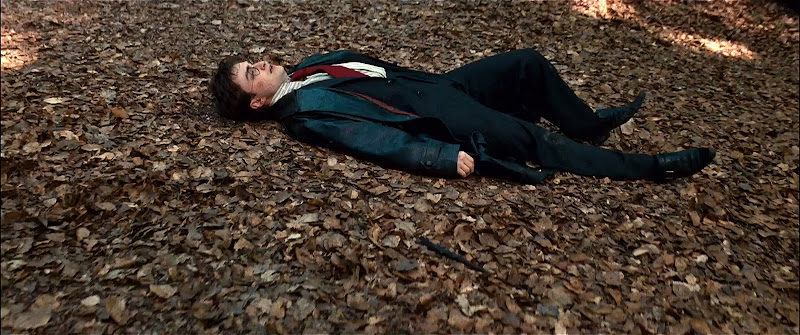
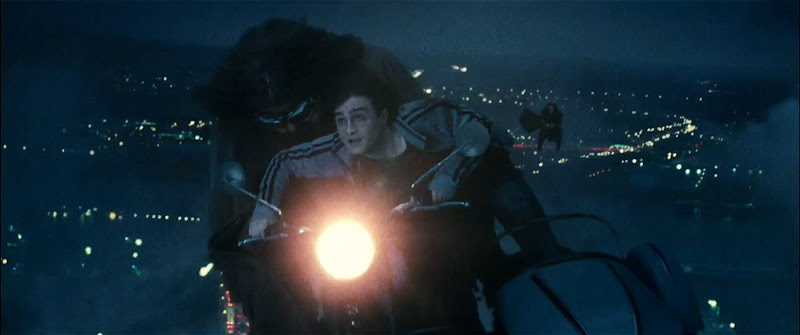
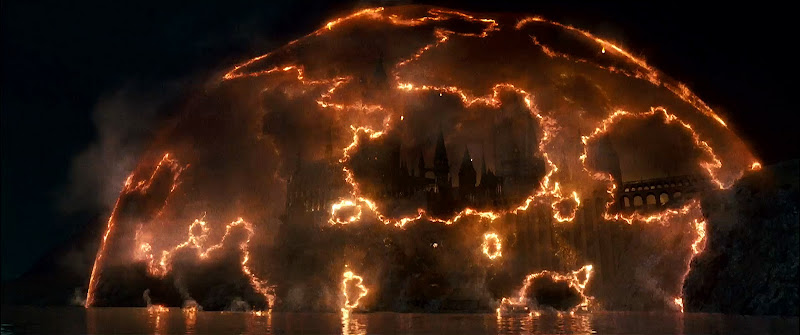
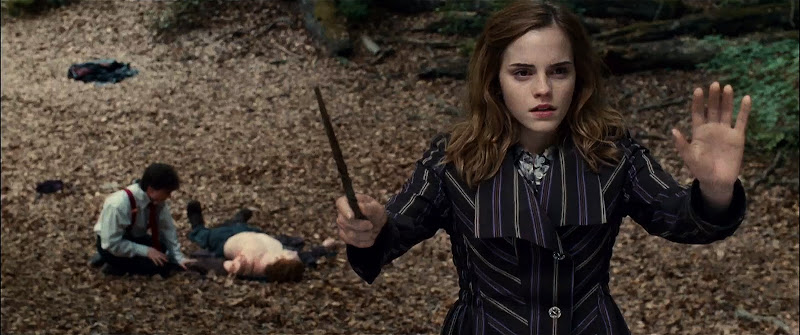
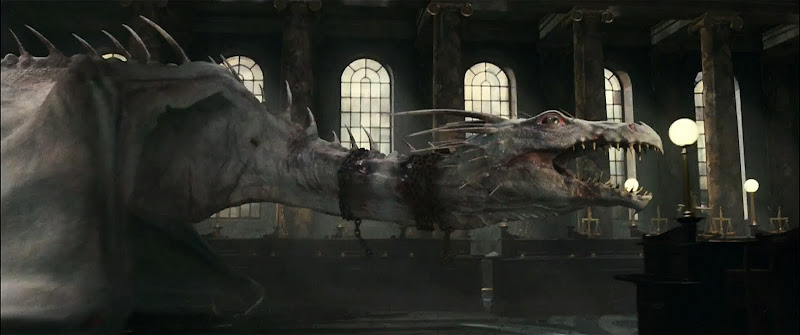
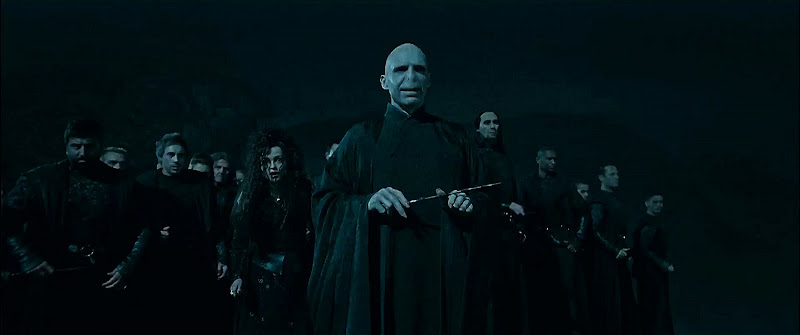
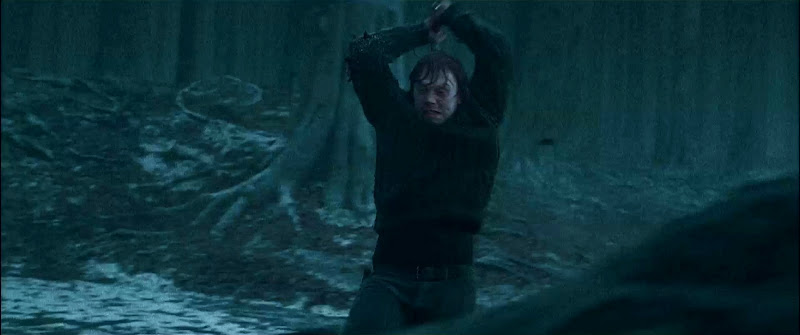
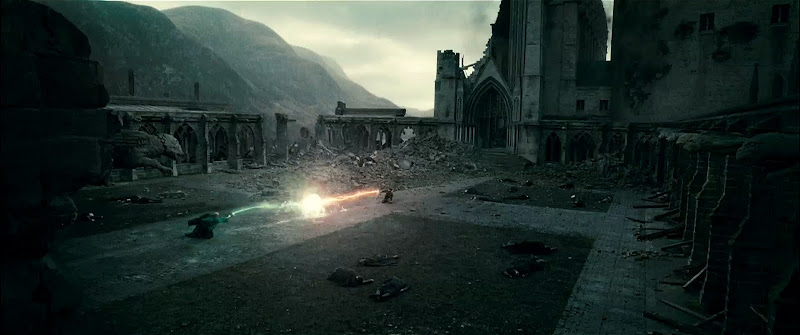
The highly anticipated Harry Potter and the Deathly Hallows (part 1) is being released in November 2010 and it is being billed as “the movie event of a generation”. The first full-length trailer has been released just in time to be shown before screenings of The Twilight Saga: Eclipse and it looks incredible.
I’ve certainly “grown up” with the books and credit the series with finally getting me back into reading after a fifteen year hiatus. I wasn’t happy with the last film (see: Film Review: Harry Potter and the Half-Blood Prince) but I have high hopes for this one. I just hope they don’t completely butcher the book in the next film but I’m hoping that the actual boundaries posed by the series coming to an end will prevent that. I must say that I am pleasantly surprised that the whole film doesn’t look to be a whole series of scenes of Harry, Hermione and Ron camping in the woods because that was the only thing I remembered after reading the book the first time!
Check out the trailer and let me know if it is not visible in your region:
Warner have also released nine stills of the trailer. Click on the images for the original full high-resolution images.
It is incredibly difficult to write a review on a Pulitzer prize-winning gem of modern literature such a Beloved. The book is flawless and was found to be the best work of American fiction of the past 25 years by a New York Times survey of writers and literary critics. The book, story and experience are no fluke either: evidence of the achievement of this book is the fact that Toni Morrison intended to portray the characters and the story in exactly the way in which it has been experienced by readers worldwide. The questions that arise and more importantly, the questions that are not answered are exactly as the author intended.
The challenge in reviewing a book such as this is to resist falling into a literary analysis but this is not an easy task. This book stimulates so many thoughts and feelings and has such bold and important themes that it makes you want to think about it and discuss it at a higher level. This is not the kind of book I’d recommend you take away on your beach holiday this summer but it is perfect if you belong to a book club or have friends that have read it as well.
Beloved is set in the 1870s, shortly after the end of slavery. Sethe (pronounced Seth-uh) is an escaped slave who lives in a big, old house at 124 Bluestone with her daughter Denver and what they believe to be the ghost of her other daughter Beloved. Don’t let the possible supernatural aspect of this book scare you away though; Beloved is not simply a ghost story and sceptical readers will find other equally plausible explanations for the events that happen.
The timeless, isolated life at 124 Bluestone is disturbed by the arrival of Paul D, another former slave who also escaped the events at Sweethome where Sethe was a slave too. He brings love and change into 124 Bluestone and seems to chase away the ghost that haunts the house. Sethe and Denver set foot outside of the home for the first time in years as they accompany Paul D to the carnival. Waiting for them when they come home is a girl with a baby face who states that her name is Beloved.
Is Beloved the incarnation of Sethe’s dead child? Whatever the truth might be, her arrival at 124 Bluestone leads to an almost catastrophic chain of events as the secrets of the past come back to the fore and Sethe, Denver and Paul D all have to confront their collectives pasts.
Beloved is written in a stream of consciousness style and is extremely hard to get into. The reader soon comes to realise though that any confusion is likely to be explained in the following chapters and a trust builds up between the author and the reader. Another aspect that becomes clear is that any ambiguity is likely to remain as Morrison continually delves into the psychological state of her characters and flirts with both perceptions and reality. There are no clear answers in this story and it is almost as if the book is experienced or consumed rather than read.
The events that unfold in the present time in the novel cannot be separated from the central themes in the book. Without the circumstances of slavery, punishment, physical and sexual abuse, betrayal, dehumanisation and degradation it is unlikely that the characters would have ever made the choices that they made. Perhaps importantly, Morrison based the book on actual events and the story of an escaped slave Margaret Garner who had murdered her own child rather than see her returned to slavery.
Morrison explores the loss of self as the characters attempt to divorce themselves from the events of the past. Beloved seems to have no memory whatsoever of her life leading up to the present and this would certainly be the case if she had been forced to repress memories of an extremely painful and abusive past.
Another important theme is dehumanisation as the characters were often treated as animals and they had bits put in their mouths, they were whipped, Sethe’s milk was stolen and Paul D was kept in a hole in the ground. Humanity is explored and the reader has to question whether Sethe’s actions were a desire to protect her children or the irrational workings of a damaged mind.
You can listen to Toni Morrison discuss the book Beloved at the BBC’s World Book Club in February 2009 (.mp3). She says at one stage that “some parts were paralysing to write” and I get that. I really get that. Some parts of this book were devastating to read and it is such a powerful experience. I was really touched by the book and felt chills in my body and tears in my eyes at several points throughout the book.
Beloved is indeed one of the best works of literary fiction I have ever read. It is not an easy book but if you persevere, it is certainly a rewarding experience. I would recommend it to all lovers of good fiction.
Beloved was made into a film in 1998 and starred Oprah Winfrey, Danny Glover and Thandie Newton. The film unfortunately received low reviews but one theme running through the reviews is "read the book!!" We’re watching the film with our book club later next month and I’m really looking forward to that.
Here is the trailer:
Purchase Beloved by Toni Morrison at Amazon.co.uk and get free delivery anywhere in the UK.
At number seven in the list of songs most recently played on my iPod is one one of my favourites bands of all time. Radar is Francis Peyrat and Christophe Goze and they are a brilliant and underrated band. Sadly there is no official video and the Radar Productions YouTube channel is now defunct. I really, really wish they’d bring out some new material.
I’ve been a lifelong fan of Hair and it was no surprise that when Milk & Sugar brought out this updated, house version of the song in 2003 that I’d like it so much. This version of “Let The Sun Shine” is the eighth most frequently played song on my iPod and is definitely an uplifting, happy song for a Monday morning!
Evgeny Mokhorev is a photographer best known for his moving and disturbing photos of adolescent and pre-adolescent models. He has a distinctive style and features nude models in urban settings around St Petersburg. His black and white photographs are disturbing and simultaneously reflect both life in the post-Soviet era and the theme of emerging sexual identity in adolescence. He has certainly courted controversy in the past as critics have remarked on what they see as inappropriate sexual depiction of his models. Mokhorev is at pains to explain that his photographs are artistic collaborations between model and photographer and that he merely captures what the models are trying to express.
Like the artist’s work, Fragile is an unsettling and at times disturbing film. As you watch Mokhorev walk around a house on a bitterly cold St Petersburg winter’s day, waking up the children who are his models that day, you have to wonder how willing they are or whether they are being used or exploited. As the film continues though (and the children wake up) you begin to see them experimenting, testing, trying out ideas with the photographer and Mokhorev’s words begin to make sense:
"Sometimes it happens that in the course of a conversation, I can just push the button on my camera, because all of what is happening in front of my lens isn’t dependent on me. No, maybe 50/50. It is always a mystery to me – who is more the author – my models or me”.
I’m still on the fence with respect to Mokhorev’s photography. I can understand the art behind it and through the film, I have come to appreciate that it is indeed an artistic expression of adolescent identity and exploration that has emerged through collaboration between model and photographer. A lot of his photography is quite incredible and I would possibly visit an exhibition but I am not sure I could ever buy any of his work.
Fragile was filmed primarily in Russian with English subtitles. The film is 80 minutes long and features interviews with noted and respected art curators and collectors such as Joseph Baio of the Aperture Foundation and Ekaterina Kondranina of the House of photography in Moscow. Although the film features a lot of Mokhorev’s art and some beautiful scenes of St Petersburg, it is also incredibly slow-moving and perhaps too long. The subtitles on screen seem to reflect a mere fraction of what was said by the Russian-speaking interviewees and the film could certainly have benefited from the additional translation to move it along a bit. By the end of the film, it was clear too that although a lot of concepts had been discussed, the documentary never actually gave any depth or insight into Mokhorev’s work. The production of the film was rather low quality although it seems that this was intended to add to the gritty subject matter of both the artist and his models.
There is another reason why both Evgeny Mokhorev’s art and this film might leave the viewer feeling uncomfortable, unsettled even. Mokhorev has chosen young people from the poorest of families and the models are often painfully thin and seem undernourished. It is the artist’s choice to work with the most vulnerable and fragile of young people and to show the elegance and brutality of life in the post-Soviet era. This depiction is further strengthened as Mokhorev’s young models continue in their quest for identity and understanding against the stark urban backdrop.
Fragile is not widely available but can be purchased directly from the film website Amadelio.org for €19 plus shipping. Alternatively, you can buy my copy for €15 plus shipping. Email me for details.
You can view some of Evgeny Mokhorev’s work on his Photosight.ru profile.
Amadelio provided me with a screener of the film for preview and all opinions expressed herein are my own.
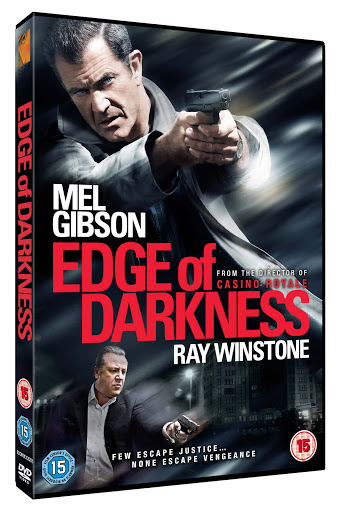
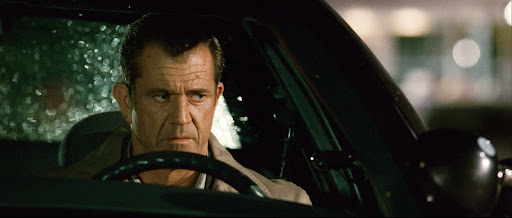
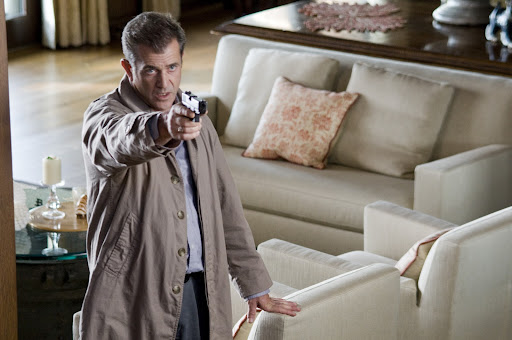
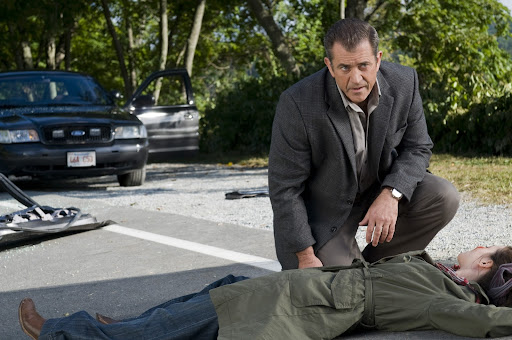
Starring Mel Gibson as Thomas Craven, Edge of Darkness is a remake of the 1985 British mini-series of the same name and is directed once again by Martin Campbell. Edge of Darkness tells the story of a homicide detective whose daughter is shot to death on his doorstep and the journey he takes to discover the truth behind her murder. Thought at first to be a retaliation from one of Craven’s collars and that he was the intended target, it soon emerges that his daughter Emma Craven was involved in a much more serious situation than he had ever imagined. As he pieces together the parts of her life that he knew nothing about, Craven learns that his daughter was an activist who led a secret life and was working to expose corruption and conspiracy in a local company called Northmoor. Emma had discovered that Northmoor were producing untraceable nuclear weapons to be used in Black Ops overseas and traced back to foreign nations and this knowledge led to her death.
The original television series was a grim and dark affair that captured the depression and hopelessness of Thatcherite Britain in much the same way that the Red Riding trilogy did last year. The film attempts to capture that oppressive atmosphere but is somewhat let down by its weak plot. Perhaps the idea of government sanctioned plots to produce dirty bombs and manufacture secret nuclear weapons has been overdone in films in recent years but I found the storyline to be quite mundane. In addition, the measures that the Northmoor executives took to kill the activists (effectively killing Emma twice) only served to draw attention to the company and its activities and the storyline is simply too hairbrained to be believable. Had they based the film on a less generic crime with more intelligent criminals, it might have worked. Another problem with the film was the pace. The film features several scenes where Craven interacts with the ghost of his daughter, both hearing her voice and seeing her as a little girl again. I imagine that these scenes were intended to be tender but they only served to slow down an already painfully slow-moving plot.
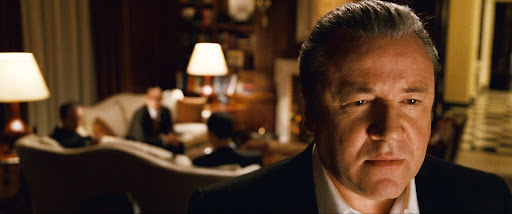
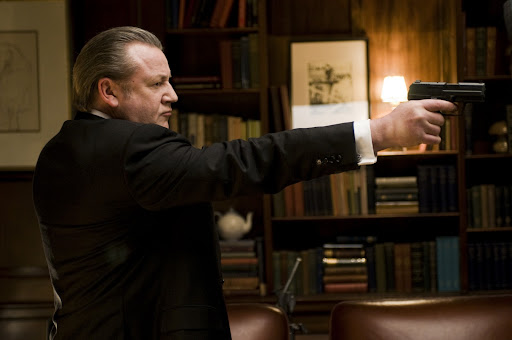
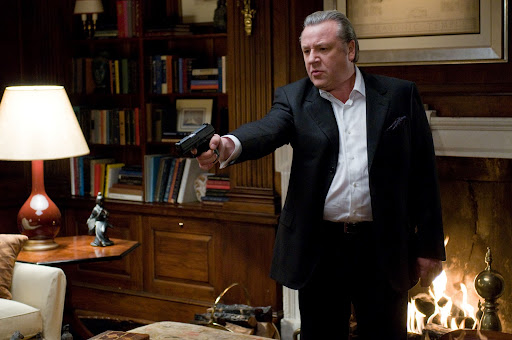
Ray Winstone and Danny Huston support Mel Gibson as the CIA operative Darius Jedburgh and Northmoor executive Jack Bennett. These are fine actors with impressive resumes but nothing about their performances in this film made much of an impression on me. The film was co-written by William Monahan who wrote the screenplay for The Departed but the film seemed to be missing the clever script that The Departed had.
The film felt clinical and it seems Campbell tried so hard to capture a certain atmosphere and setting that in the end he lost it completely. There is a certain level of suspense throughout the film but the end result is that you go through the motions with Thomas Craven as he mechanically picks up the clues and plods through a weak plot to arrive at a rather predictable end. There was a slight twist at the end, granted, but by then I kind of just wanted the film to end. It is surprising really as Martin Campbell has succeeded in the past with Casino Royale and the original Edge of Darkness series but he certainly seemed to miss the mark with this film.
Edge of Darkness was ultimately disappointing and especially so as we’ve come to expect so much more from the director, screenwriter and actors involved. I’d give the film one and a half stars out of five.
The region 2 release of the DVD includes an audio commentary with director Martin Campbell; nine featurettes including “Mel’s Back”, “Revisiting the Edge of Darkness mini-series”, “Adapting the Edge of Darkness mini-series”, “Edge of Your Seat”, “Making a Ghost Character Real”, “Craven’s War of Attrition”, “Director’s Profile”, “Scoring the Film” and “Boston as a Character” and deleted scenes. The DVD will be released on June 14 in the UK.
Article first published as DVD Review: Edge of Darkness (2010) on Blogcritics. I was provided with a copy of the DVD for preview and all opinions expressed herein are my own.
Anita and Me by Meera Syal is the story of a young Punjabi girl growing up in the fictional English village of Tollington in the Midlands in the 1970s. The book follows Meena during her pre-teen years as she is desperate to fit in with the other children in her neighbourhood while forever feeling like an outsider because she is “different”. Meena makes friends with Anita, a slightly older girl who is the self-proclaimed leader of a motley gang of outcasts and outsiders. She seems tough and streetwise to Meena and Meena fights earnestly for her attention and approval.
Meena's rich cultural heritage provides a colourful background to the story. The story tells of exotic food, exquisite clothing and late night dinner parties where her parent’s Punjabi friends swap stories of The Partition and a life far more exciting than the daily humdrum life in Tollington in the Midlands.
As the book progresses, Meena seems to fit in quite well with the other children and the family are certainly accepted, admired even, by the community. This all begins to fall apart though as ignorance and racism clash as Meena encounters first hand how hurtful racism and ignorance can be and she struggles to understand the relationships between people and their ideas.
This is an incredible story of Meena’s impressive rite of passage and her development from a selfish, self-involved little child seeking to reject everything about her culture and heritage into a self-assured and confident young girl capable of making the decisions that count. Meera Syal is a well-known comedienne and actress and she infuses the book with an irreverent style which is just as well. There are some pretty serious issues that are raised in the book and I think the comedic style is what eases the reader through those parts. The book is said to be semi-autobiographical as Meera grew up in a mining village in Essington in Wolverhampton.
In terms of readability, I actually voted this book quite low at 50% because I really struggled to get through the first half of the book. The story is told in the narrative style with Meena using flashbacks and snippets of overheard conversations to piece the story together. In the end, the story is expertly woven together and the book itself is incredibly powerful but it was quite hard to read. I personally prevailed by simply setting aside longer stretches of reading time and trying to read whole chapters at a time which is not easy when you are a commuter!
I’m glad I did though. We all have memories of summers that seemed to last forever and of the lifetimes we spent as young children. I’m sure you’ll understand then when I say that although it only covers a year or two out of the life of a pre-teen little girl, this is an epic story that will creep under your skin and colour your perception for a long time to come. The book has recently found its way onto school reading lists which is fantastic as it could certainly work towards teaching children about tolerance and cultural differences.
Deducting points for readability, I give the book four out of five stars and I would recommend it for adults and teenagers alike.
This is the ninth most played song in my music collection and that is absolutely no surprise. It became known as “Mandy’s song” in our office because every, single time it came on I would exclaim, “I love this song!”. It is just such a happy, uplifting song.
Walk Like You Have Somewhere to Go: From Mental Welfare to Mental Health by Lucille O'Neal is meant to be an uplifting story about how a woman came from the humblest beginnings to become mother of one of the greatest sports stars that ever set foot on earth – Shaquille O’Neal. It is never pleasant to have to write a negative review but unfortunately, I found this book to be almost devoid of redeeming characteristics. The problem with the book is twofold and had to do with that “humble” upbringing and Lucille’s interpretation of the events in her life.
Lucille O’Neal came from a relatively privileged middle-class background. Her parents split up when she was young and her grandparents were extremely cold but that does not amount to an impoverished or deprived childhood. Having encountered impoverished children and families in urban and rural settings, in both so-called first and third world countries, I found Lucille’s self-indulgent and exaggerated focus on her unhappy childhood to be beyond grating. Many children across many cultures experienced a coldness and lack of moral support while growing up in the 50s and 60s and many of them grew up to provide healthy and loving environments for their children nevertheless.
Part of the purpose of an autobiography is for the author to revisit the events in her life and the decisions she made and to pass a mature analysis and judgement on her past. It is not enough to simply report the events in her life; she needs to explain the significance of those events and her decisions and how these helped her to grow and become a better person. The problem is that Lucille has not done this. She may be a fantastic and inspiring public speaker (and she is) but I did not feel that she transferred those qualities into this book.
She describes falling pregnant as a teenager; holding endless dinner parties at her home; slipping into alcoholism as an adult and eventually leaving her husband as linear events. She portrays them alternatively as the products of cold and dissatisfying close relationships or situations engineered for her by God but she never once takes ownership of her actions nor does she accept responsibility for her decisions. It is a real pity actually because I think there is a story to tell here but I don’t think Lucille has sufficiently moved past the events in her life to be able to pass wisdom through the written medium in the way that her charisma and personality do when she speaks.
I give Walk Like You Have Somewhere to Go: From Mental Welfare to Mental Health one out of five stars and unfortunately would not recommend this book.
I obtained a copy of this book to review through the BookSneeze programme. All opinions expressed in this review are my own.